






Partners and supporters

A rare diagnosis must not mean being overlooked. High research costs and uncertain commercial returns can limit interest in developing treatments. That is why we connect families, scientists and supporters to help KDM6B research move forward.

One family’s story from Ostrava, Czech Republic

Oliwer’s world is bigger than his diagnosis.

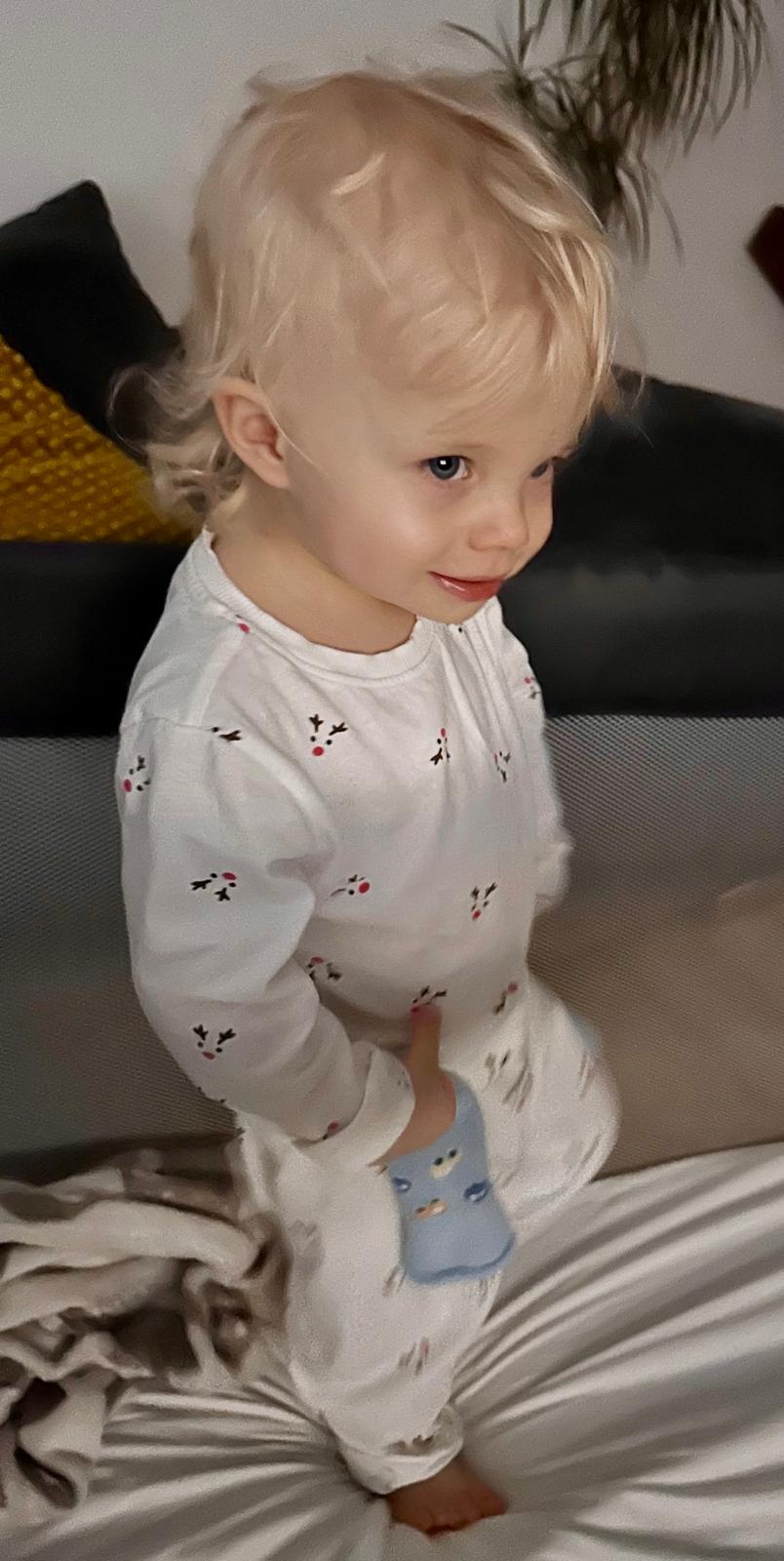
Oliwer is a curious little boy learning to discover the world at his own pace. He lives with a rare neurodevelopmental condition associated with a change in the KDM6B gene. This is his story: the care he needs and our search for further answers.

Oliwer outdoors in a blue jacket and hat
Every little
step counts
Oliwer20 months · November 2026 · Ostrava
1Oliwer’s diagnosis in the Czech Republic
~90diagnosed worldwide1
KDM6Ba gene important for development
Our direction

What matters to us

Every next step starts with Oliwer’s life and needs, and with what a better understanding of KDM6B could make possible.

01Advance knowledge of the KDM6B gene

Share experience, seek and carry out meaningful research collaborations that can expand knowledge of KDM6B and rare neurodevelopmental conditions.

02Understand Oliwer’s needs

Recognise his strengths and the areas where he needs support, and look for answers that can help us understand his development better.

03Ensure good care for him

Bring together medical care, rehabilitation, and everyday support in ways that fit Oliwer and his own pace.

20MONTHSNovember 2026
A day in Oliwer’s life

Small steps. A big world.

Every day is a little different. This is our glimpse of Oliwer’s day — moments of closeness, trying new things, rest, and support woven naturally into family life.

I’m Oliwer. I can’t yet tell you about my day in my own words, so Mum and Dad piece it together for me — from looks, movements, play, and moments we really share. They don’t know exactly what is going through my mind. But they know my world is full of things worth exploring, and that sometimes all of us need to slow down.

My body is learning at its own pace. Low muscle tone makes it harder for me to stay steady and move with confidence. Something that seems ordinary to another child can be a whole task for me. So Mum and Dad don’t only watch how quickly I reach a goal. They notice each attempt, each new bit of confidence, and the moment when I need to rest.

One of our games is with blocks. I used to knock the whole tower down at once; now I sometimes take it apart, one block at a time. I don’t need to build a tall tower for it to feel like a big moment to us. Mum and Dad see that I learn in my own way — and that a small change can mean a great deal.

Words are still taking their time to find me. I can’t yet say everything I want, so we are learning to understand one another through a look, a movement, or the things I return to. Meals need special care too: some textures are difficult for me, and most of my food is smooth and puréed. Mum and Dad adapt it to what I can manage, making sure there is care and calm around the table.

Rehabilitation, exercises, and appointments with specialists are part of our week. Some days are shaped around what my body needs; on others, an ordinary moment at home or outside matters most. Mum and Dad put medical reports together, arrange my care, and look for experience from specialists in other countries. There is still a lot we don’t know about the change in my KDM6B gene or what it means for me.

Mum and Dad would like a clear answer for every next step. Often, they don’t have one yet. Still, each day they return to what they can do now: stay close to me, seek care that fits, and share in what I am learning. When a moment is hard, they try to go through it with me slowly, one small part at a time.

As the day grows quiet, not everything that matters fits into words or a medical report. There is me, Mum and Dad — the moments we share, their patience, and the world we are discovering together. They call these little steps. For me, each one is the beginning of something big.

HOW IT WORKS

How KDM6B helps regulate genes

KDM6B contributes to modifying regulatory marks on histones. This can influence the accessibility of some genes in a cell.

Diagram of gene regulation by <span class="gene-name-accent">K</span>DM<span class="gene-name-accent">6B</span>Animated diagram of DNA, histones, and the KDM6B protein. KDM6B H3K27me3KDM6B RNA
01 / Our story

First Oliwer. Then the diagnosis.

We are his parents. We want people to meet our son first — his personality, joys, and small everyday milestones. Only then comes the rare name that appeared in his medical records.

Oliwer was born in March 2025. His development is slower, and he needs support with movement, communication, and other areas. Every new skill takes patience, daily effort, and the help of people who support him.

Genetic testing revealed a rare deletion affecting exons 17 to 22 of the KDM6B gene. This change is associated with Stolerman neurodevelopmental syndrome. We are still learning about the diagnosis and its features, and there is very little experience available.

We don’t have all the answers. We want to choose each next step with Oliwer’s needs in mind and alongside people who can help him.

Our family has also experienced the loss of our second son, Christian. Testing found the same deletion in the KDM6B gene, and the pregnancy ended in the sixth month.

FAMILY VOICES

Every diagnosis belongs to a person with a story.

We are preparing stories from other families living with KDM6B. We will share the experiences of families who choose to tell their story.

02 / About the diagnosis

A gene that helps guide development.

The KDM6B gene produces a protein involved in regulating the activity of other genes. These regulatory processes are important, among other things, for the development and function of the nervous system.

Oliwer’s genetic testing describes a deletion of six exons (17–22). Exons are parts of a gene that carry instructions for making a protein.

Stolerman neurodevelopmental syndrome can affect children in different ways. Oliwer’s care is currently tailored to his specific needs; no targeted treatment for the syndrome itself is known.

Genetic finding

Deletion of exons 17–22

According to the genetic report, part of one copy of the KDM6B gene is missing.

part of the KDM6B genezasažený úsek
Motor developmentHypotonia and delayed motor development require ongoing rehabilitation support.
Communication and learningSupport for speech, communication, and development according to Oliwer’s abilities and pace.
Specialist follow-upCoordination of care and investigations with paediatric specialists.
03 / Hledání odpovědí

A rare diagnosis. Questions without borders.

We are in contact with researchers and specialists in different countries. We share the information available about Oliwer’s case and are learning which research directions may be relevant to KDM6B.

SIMONS SEARCHLIGHT · OCTOBER 2026

What do data from 26 participants show?

This update summarizes medical history data from 26 Simons Searchlight participants with KDM6B-related syndrome (Stolerman neurodevelopmental syndrome). It describes enrolled participants, not everyone who has the diagnosis.

Participants’ ages

  • 0–4 years10
  • 5–9 years5
  • 10–14 years5
  • 15–19 years4
  • 20–24 years0
  • 25+ years2

Developmental and behavioral conditions

  • ADHD10
  • Anxiety8
  • Autism16
  • Intellectual disability / developmental delay19
  • Language delay / impairment23

Neurological conditions

  • Tic disorder2
  • Seizures2
  • Movement disorder3
  • Low muscle tone16
  • Large head size7
  • High muscle tone2
  • Coordination problems3

Gastrointestinal conditions

  • Constipation11
  • Diarrhea2
  • Gastroesophageal reflux (GERD)8
  • Irritable bowel syndrome (IBS)1

Counts are numbers of individuals. A participant may be counted in more than one category. The report includes only participants with pathogenic or likely pathogenic variants and no additional variants. Source: Simons Searchlight Registry Update KDM6B, October 2026.

Content updated ·

Four paths towards treatment

We are exploring four possible paths that could contribute to treating KDM6B-related disease in the future.

Hover over a path, select it with the keyboard, or click to keep its details open. On mobile, tap a path.

KDM6B
Research infrastructure for four directionsProject 01 – Patient-derived KDM6B cell modelCreating and validating a patient-derived iPSC model to study KDM6B mechanisms and prepare follow-up experiments.Explore the project
Preparing the cell model

Masaryk University

Brno, Czech Republic
  • Preparation of a patient-derived cell model.
  • Generation and characterisation of an iPSC line.
  • Starting cell material for further experiments.

Technical feasibility confirmed; implementation conditions are being clarified.

Potential follow-up experiments

Duke University

USA
  • Potential research into molecular and cellular mechanisms of KDM6B.
  • Potential use of the model in follow-up experiments.

Institutional requirements are being reviewed.

Michigan State University

USA
  • Research using neural cell models.
  • Potential studies of oligodendrocytes, myelination and neurodevelopmental mechanisms.

Scientific interest and discussions about potential use of the model.

Further research connections

UT Southwestern Medical Center

USA
  • Exploring possibilities for institutional involvement in KDM6B research.

Institutional review – follow-up pending.

Czech Centre for Phenogenomics

Vestec, Czech Republic
  • Potential complementary models and further research stages.

An alternative and follow-up route; organisational, capacity and funding requirements remain to be resolved.

Research terms, simply explained25 terms

Genetics and cell research

KDM6B

The KDM6B gene carries instructions for a protein involved in regulating other genes. Changes in this gene may affect development, and their effects can vary between people.

DNA

The molecule that stores an organism’s genetic instructions. Genes are specific sections of DNA.

Genetic variant

A difference in DNA compared with a reference sequence. Many variants have no known health effect; their significance is assessed from the evidence.

Exon

A section of a gene retained in the resulting RNA. Some exons contain instructions used to make a protein.

Deletion

The loss of a section of genetic material. Oliwer’s genetic report describes a deletion affecting exons 17–22 of KDM6B.

Histone

A protein around which DNA is organized inside a cell. Chemical modifications to histones can affect how easily a cell uses certain genes.

H3K27me3

A chemical mark on histone H3. KDM6B helps remove this mark, which can affect how accessible some genes are.

RNA

A molecule that helps cells transfer and use genetic information. Some types of RNA are involved in making proteins.

iPSC

Induced pluripotent stem cells. They are made by reprogramming ordinary cells and can be used to produce different cell types for laboratory research. They are not a treatment and do not by themselves correct a genetic change.

Cell model

Cells grown or prepared so researchers can study selected biological processes in the laboratory. A model represents only some aspects of how the human body works.

Diagnosis and tests

Stolerman syndrome

A rare neurodevelopmental condition associated with changes in the KDM6B gene. Features and their severity vary from person to person.

Neurodevelopmental

Related to the development of the nervous system and associated skills, such as movement, communication, learning or behavior.

Hypotonia

Reduced muscle tone. It can affect posture and movement; its effects vary between individuals.

Neurometabolic tests (NMS)

Tests focused on metabolic processes related to the nervous system. The specific tests and their significance are determined by clinicians according to the clinical question.

Magnetic resonance imaging (MRI)

An imaging test that uses a magnetic field to produce detailed pictures of internal structures, such as the brain.

Research and data

Preclinical research

Research carried out before people may be involved. It uses laboratory and other models; results may indicate whether further work is warranted, but do not guarantee a clinical study or treatment.

Clinical study

Research involving people under an approved plan. A study may examine safety or effectiveness; taking part does not in itself guarantee a health benefit.

Ethics approval

An independent review of whether planned research is ethically acceptable and protects participants. Approval does not confirm that the approach being studied is effective.

Pathogenic / likely pathogenic variant

A classification used when available evidence indicates that a variant may be associated with a condition. “Likely pathogenic” expresses less certainty than “pathogenic.”

Bioinformatics

The use of computational methods to store, compare and analyze biological information, such as genetic data.

Registry

An organized collection of information about people who have joined it. Registry data describe its participants and may not represent everyone with the condition.

ADHD

Attention-deficit/hyperactivity disorder. This is a clinical term; its appearance in a summary does not describe how it affects any particular child.

GERD

Short for gastroesophageal reflux disease: the backflow of stomach contents into the esophagus, which can cause symptoms.

IBS

Short for irritable bowel syndrome, which can be associated with symptoms such as abdominal pain and changes in bowel habits.

Grant

Funding awarded to a specific project under terms, a budget and goals set in advance.

Research & Updates ↗
Transparency and responsibility

Every donation has a clearly defined purpose.

Below are examples of research expenses the foundation may support. Specific expenditure follows the purpose of each donation and the approved budget.

KDM6B research

The fund may support expert-reviewed projects studying KDM6B and its effects on cells and development. Each proposal is assessed for scientific value, feasibility, budget and expected outcomes. Support is provided under an approved budget and the donor’s terms.

  • Grants for specific KDM6B projects selected through expert review, with a defined budget and clear objectives.
  • Laboratory studies testing how a change in the KDM6B gene affects the production and function of the KDM6B protein.
  • Cell models and experiments that help show how the change affects cells and the regulation of other genes.
  • Analysis of genetic material, proteins, and other samples, including sample processing, reagents, and specialist lab services.
  • Bioinformatics and computational analysis to compare genetic findings, study results, and other relevant data.
  • Study of health features and development associated with KDM6B, using information only with consent and appropriate safeguards.
  • Joint work between laboratories in different countries, including research coordination and secure sharing of permitted data and samples.
  • Pilot studies and preparatory work to test whether larger research is feasible, followed by publication of the findings.
HOW THEY CONTRIBUTE
  • Simons SearchlightHelps us work with current summary data from the international registry of people with KDM6B-related syndrome. The data show what is currently known about the condition and help shape research questions.
  • PACS2 Research FoundationShares its experience and provides essential mentoring as we establish our endowment fund and shape how it operates.
  • Rehabilitace POKROKSpecialist rehabilitation has played a key role in helping Oliwer reach milestones in gross motor development.
  • Kolpingova rodina SmečnoConsultations on development and the loan of equipment that supports fine motor skills.

05 / Support for research

Help open the next question.